September 18, 2023
Understanding the Flyback Diode: Your Essential Guide to Functionality and Why You Need One

Share
BuildWithFlux


A curated collection of PCB and hardware projects crafted by our talented Flux community.

A flyback diode is a semiconductor device that is connected across an inductor in a circuit to protect other components from voltage spikes. When an inductive load is suddenly de-energized, the energy stored in the inductor has to go somewhere. The flyback diode provides a path for this energy, preventing damage to other components like transistors.
Inductors store energy in their magnetic fields. When the current flowing through an inductor changes, it induces an electromotive force (EMF) due to its inductance. This induced EMF can be harmful to other components in the circuit, especially sensitive ones like integrated circuits (ICs).
When an inductive load like a solenoid or coil is switched off, the energy stored in its inductance must be dissipated. Without a flyback diode, this energy can cause voltage spikes, leading to arcing across switch contacts and potential damage to ICs.
Transistors are particularly vulnerable to voltage spikes. A flyback diode can protect the transistor by providing a path for the inductive energy to be safely dissipated.
In some applications, a resistor or a snubber circuit may be used in conjunction with the flyback diode to dampen oscillations and further protect the circuit.
Understanding the flyback diode is crucial for anyone dealing with circuits that include inductive elements. Whether you're working with solenoids, coils, or any inductive load, a flyback diode is your go-to component for protecting against voltage spikes and ensuring that energy is safely dissipated. By selecting the appropriate type—be it a standard, Zener, or freewheeling diode—you can optimize your circuit for both safety and efficiency.
A flyback diode is a semiconductor device that is connected across an inductor in a circuit to protect other components from voltage spikes. When an inductive load is suddenly de-energized, the energy stored in the inductor has to go somewhere. The flyback diode provides a path for this energy, preventing damage to other components like transistors.
Inductors store energy in their magnetic fields. When the current flowing through an inductor changes, it induces an electromotive force (EMF) due to its inductance. This induced EMF can be harmful to other components in the circuit, especially sensitive ones like integrated circuits (ICs).
When an inductive load like a solenoid or coil is switched off, the energy stored in its inductance must be dissipated. Without a flyback diode, this energy can cause voltage spikes, leading to arcing across switch contacts and potential damage to ICs.
Transistors are particularly vulnerable to voltage spikes. A flyback diode can protect the transistor by providing a path for the inductive energy to be safely dissipated.
In some applications, a resistor or a snubber circuit may be used in conjunction with the flyback diode to dampen oscillations and further protect the circuit.
Understanding the flyback diode is crucial for anyone dealing with circuits that include inductive elements. Whether you're working with solenoids, coils, or any inductive load, a flyback diode is your go-to component for protecting against voltage spikes and ensuring that energy is safely dissipated. By selecting the appropriate type—be it a standard, Zener, or freewheeling diode—you can optimize your circuit for both safety and efficiency.



Streamline PCB development with NextPCB templates in Flux, featuring pre-set constraints, AI-assisted layouts, and seamless manufacturing transitions.

Electronics, whether in a phone or an industrial motor, face potential threats from unchecked electrical currents. Our guide introduces protection circuits, the essential safeguards that monitor and respond to such electrical anomalies.

This guide is here to help. Based on the most common questions we hear from our users, it walks through practical solutions to unblock your designs and give you more confidence as you build.

This holiday season is a great time to try something new and unleash your creativity with open-source hardware projects.
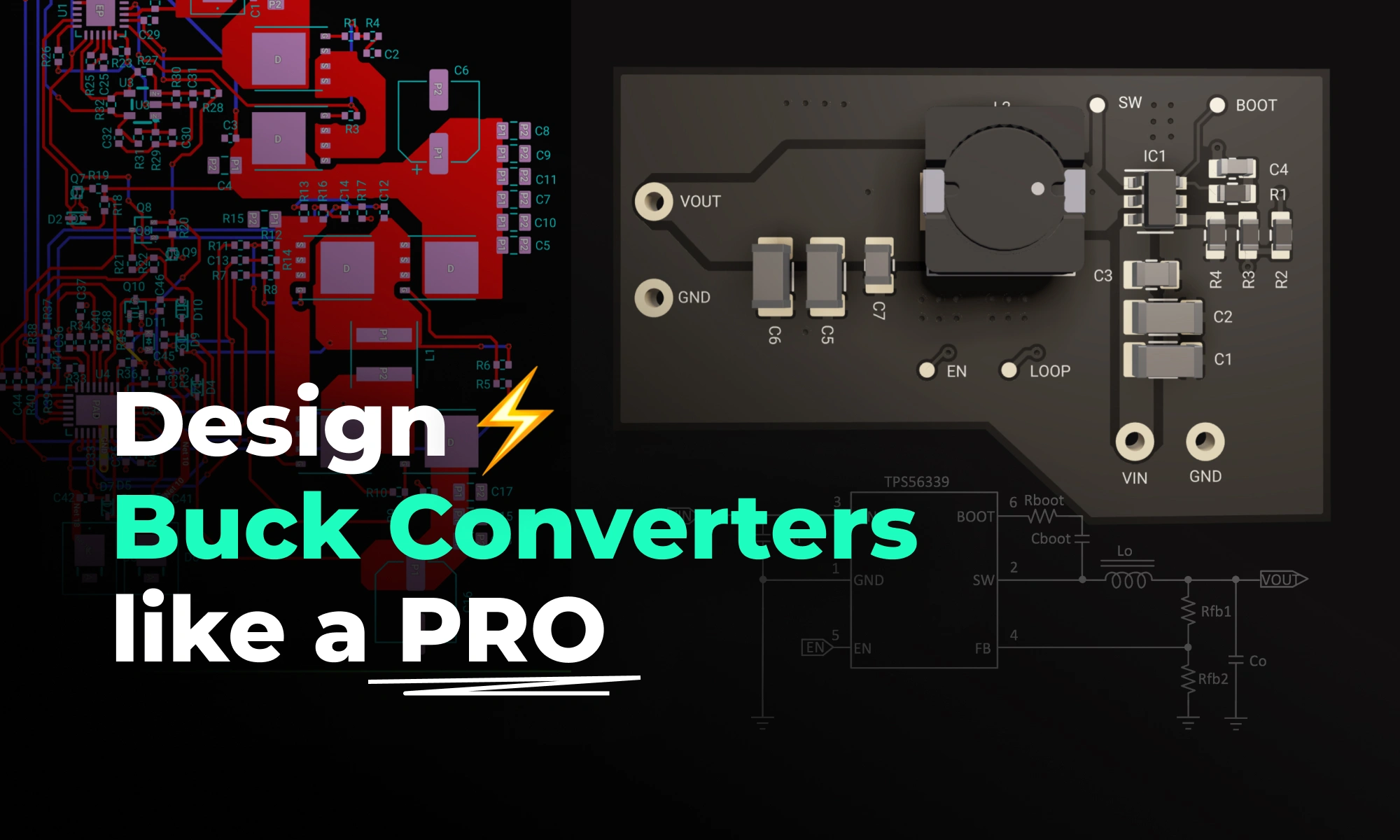
Design high-performance buck converters with proven PCB layout best practices. Cut noise, save space, and optimize your power supply design with this guide.

Designing an AI pin would normally take months, but in this project, we did it in hours. In our step-by-step guide, you'll see how Flux can accelerate your design process and bring your AI pin project to life.
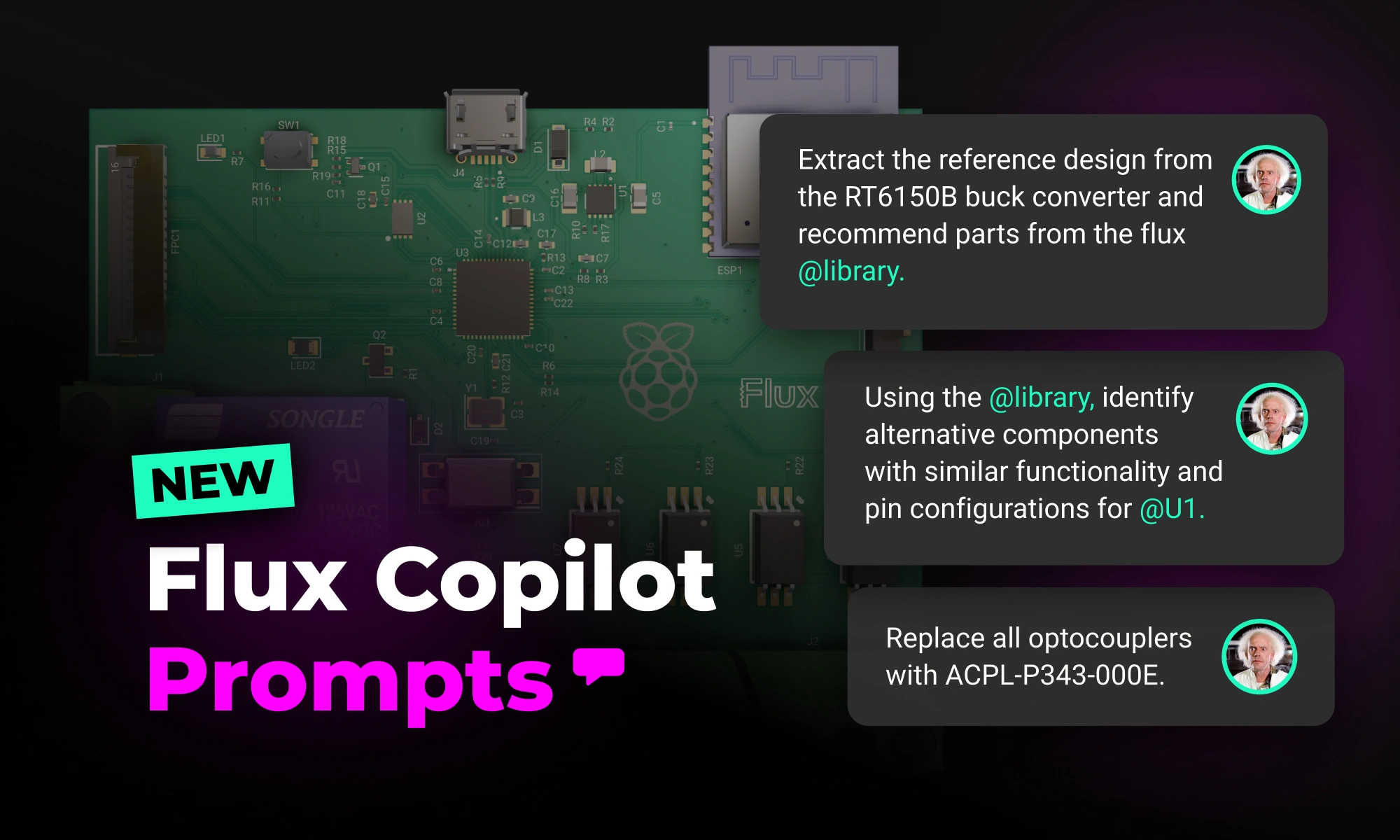
With the latest release of Copilot it isn’t just smarter—it’s hands-on, placing components and applying bulk changes to your project instantly. But to get the most out of it, knowing how to craft the right prompt is key.

ESP32 microcontrollers are affordable, low-power SoCs with integrated Wi-Fi and Bluetooth. Offering dual-core processing, ample memory, and versatility, they excel in IoT, wearables, and smart home applications. The ESP32's continuous evolution promises exciting possibilities ahead.

Are you creating the right hardware solution for the problem that truly matters? Learn how to validate ideas, prototype fast, and use modern tools to turn concepts into successful products.

In this article, we will explore Arduino Uno's fundamental concepts, specifications, and its comprehensive pinout details including programming with the Arduino IDE.

We want to make this process as easy as possible for all Flux users. So, after hundreds of hours of testing and talking to dozens of real users, we’ve put together six prompting tips that will help you get the most out of Copilot. Read on to learn more!

The guide provides an easy-to-follow formula for converting mm to mils, essential in engineering and PCB design for precise measurements and applications.